Heat pumps in older homes: flow temperature is the number that decides
Whether a heat pump works in a 1930s villa is rarely a question of the building's age. It is a question of how hot the radiators need to be.

A heat pump works best when it only has to lift heat by a small amount. The flow temperature, the temperature of the water sent to your radiators or underfloor heating, is therefore the single most important number for its efficiency. As a rule of thumb, every degree lower saves 2 to 3 percent of electricity. Underfloor heating in a new build needs perhaps 30 to 35 °C; radiators in an older home may need 50 to 55 °C on the coldest days. Many older homes manage that with modest changes.
The test you can run this winter
If you still have a gas or oil boiler, lower its flow temperature step by step on cold days: first to 60, then 55, then 50 °C. Open all radiator valves fully and see which rooms stay warm. Rooms that stay comfortable tell you the existing radiators are large enough; the one or two rooms that cool down are your list for improvement. A heating engineer can turn this into a room-by-room heat load calculation (EN 12831 in Europe), which is the professional basis for sizing a heat pump.
Radiators: replace a few, not all
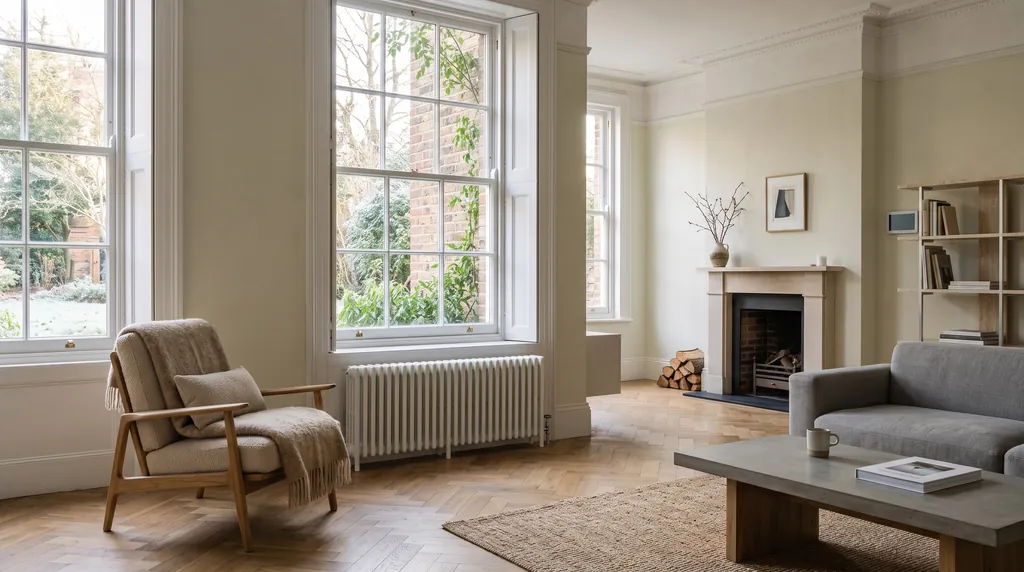
A radiator's output falls as the water gets cooler. Rooms with high heat loss or small radiators need help first. Options include larger panel radiators, low-temperature radiators with small fans that multiply output at low flow temperatures, or slim column radiators that suit period interiors. In practice, replacing three or four radiators is often enough to bring a whole house down by 10 °C of flow temperature.
Hydronic balancing and the heating curve
In many older systems, water takes the easiest route: radiators near the boiler run hot, distant ones lukewarm, and the whole system is set too hot to compensate. Hydronic balancing adjusts each valve so that every radiator gets the flow it needs. Together with a correctly set heating curve, which ties the flow temperature to the outdoor temperature, it is one of the cheapest efficiency measures in any heating system, with or without a heat pump.
Small fabric improvements, large effect
Every reduction in heat loss lowers the flow temperature the house needs. Insulating the top floor ceiling or the roof, sealing draughty windows and doors, and replacing the worst single-glazed windows can make the difference between 60 and 50 °C. You do not need a full renovation before installing a heat pump, but the measures with the shortest payback are worth doing first.
High temperature units and hybrids
Heat pumps using the natural refrigerant propane (R290) can deliver flow temperatures of 70 °C or more, which makes them technically suitable even for homes that cannot be improved. At such temperatures they run at noticeably lower efficiency, so they work, but cost more to run. A hybrid system, where a boiler covers only the coldest days, can be a bridge for homes in transition. Use our running cost calculator to see how the flow temperature changes the bill.
Questions and answers
Can a heat pump heat an old house?
In most cases, yes. The key is the flow temperature the house needs on cold days. Many older homes stay warm at 50 to 55 °C after replacing a few radiators and balancing the system.
What flow temperature is ideal for a heat pump?
The lower the better. Underfloor heating often runs at 30 to 35 °C, radiators at 45 to 55 °C. Each degree less improves efficiency by roughly 2 to 3 percent.
Written by the sunaliv editorial team. Figures are typical ranges for Central Europe unless stated otherwise and reflect the state of knowledge in October 2026. Spotted an error? Write to info@nextao.de and we will correct it openly.