How much electricity does a rooftop solar system really produce?
Kilowatt peak is what you buy. Kilowatt hours are what you get. The gap between the two is decided by location, orientation, shade and heat.
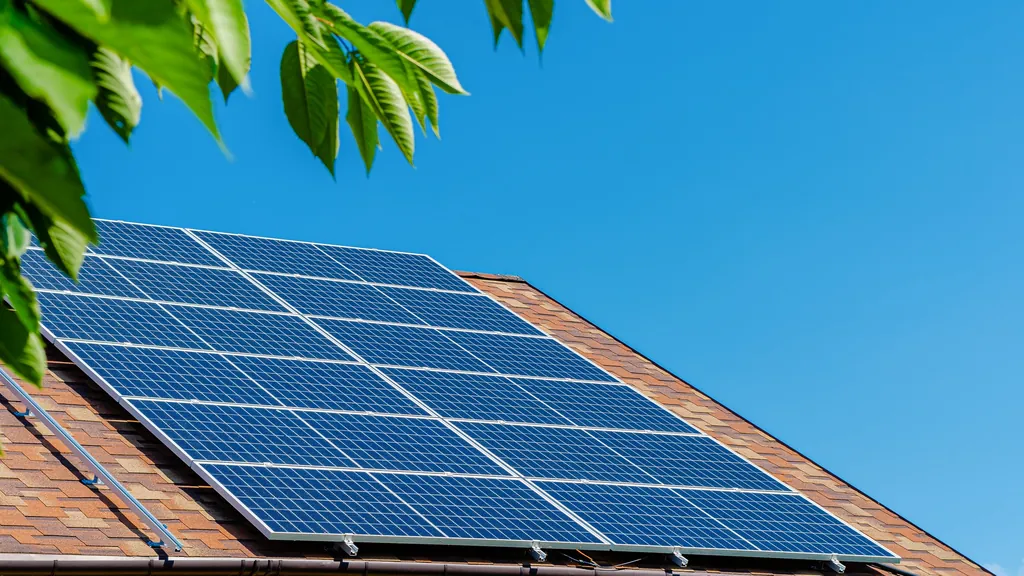
A solar system is sold in kilowatt peak (kWp), the output of its modules under standard laboratory conditions. What pays the bills is the energy it delivers over a year, in kilowatt hours (kWh). The link between the two is the specific yield: kilowatt hours per kilowatt peak and year. On a well oriented, unshaded roof in Germany, Austria or Switzerland it lands somewhere between 850 and 1,100. A 10 kWp system there produces roughly 9,000 to 11,000 kWh a year.
Location sets the baseline
Sunshine hours and the angle of the sun vary more across Europe than most people expect. Typical values for a south-facing roof at 30 to 35 degrees:
- Northern Germany, the Netherlands, the UK: about 850 to 1,000 kWh/kWp
- Southern Germany, Austria, Switzerland: about 1,000 to 1,150 kWh/kWp
- Northern Italy and southern France: about 1,200 to 1,400 kWh/kWp
- Spain, Portugal, southern Italy, Greece: about 1,400 to 1,700 kWh/kWp
For an address-level estimate, the European Commission's free PVGIS tool uses satellite irradiation data for any point in Europe and beyond. It is the reference most installers use, and a good way to check the numbers in an offer.
Orientation and tilt matter less than you think
South at 30 to 35 degrees is the theoretical optimum in Central Europe, but the curve around it is flat. South-east and south-west roofs lose only a few percent. Pure east or west roofs typically reach 80 to 90 percent of the south value, and an east-west split spreads production over a longer day, which often raises the share you use yourself. Even steep or shallow roofs rarely lose more than 10 to 15 percent. A north roof is the exception: at low pitch it can still work, at steep pitch it rarely pays.
Shade is the expensive variable
Modules are wired in strings, and a string behaves a little like a garden hose: squeeze it at one point and the flow drops everywhere. A chimney shadow sweeping across two modules at 3 pm can pull down a whole string. Modern modules with half-cut cells and bypass diodes soften the effect, and module-level electronics (power optimisers or microinverters) contain it to the shaded module. If your roof has dormers, chimneys or tall trees, ask for a shade analysis over the whole year, not a single afternoon.
Heat lowers output
Solar cells work better cold. Crystalline modules lose roughly 0.3 to 0.4 percent of output for every degree Celsius above 25 °C cell temperature, and on a still summer day cells easily reach 60 °C. That is why a bright, cool April day can beat a hazy July afternoon. Good rear ventilation helps; in-roof systems that sit flush in the roof run warmer than modules on rails.
How to read an offer
A solid offer states the expected annual yield in kWh, the specific yield behind it, and the losses assumed for shade, cables and the inverter. Be wary of yields far above PVGIS for your address. Check the inverter size too: a DC to AC ratio of 1.1 to 1.3 is common and sensible, because modules rarely deliver their full peak output, and the small amount clipped at noon on perfect days is usually worth less than the cost of a larger inverter.
Over the years
Modules age slowly. Modern products typically lose 0.3 to 0.5 percent a year, and many manufacturers guarantee 80 to 90 percent of rated output after 25 or 30 years. Inverters are the part most likely to need replacing within the life of a system. Monitoring pays for itself: compare each month with the same month last year, and a failed string or a dirty array stands out quickly.
Questions and answers
How much does a 10 kWp solar system produce per year?
In Central Europe, an unshaded, south-facing 10 kWp system typically produces about 9,000 to 11,000 kWh a year. In southern Spain or Portugal it can reach 14,000 to 17,000 kWh.
Is an east-west roof worth it?
Usually yes. East and west roofs reach roughly 80 to 90 percent of a south roof, and production spread over the morning and evening often matches household use better.
Written by the sunaliv editorial team. Figures are typical ranges for Central Europe unless stated otherwise and reflect the state of knowledge in October 2026. Spotted an error? Write to info@nextao.de and we will correct it openly.