Solar panels compared: TOPCon, heterojunction, back-contact and glass-glass
Module efficiency has crept above 22 percent, and the differences between technologies now show up more in heat, shade and looks than in the datasheet headline.
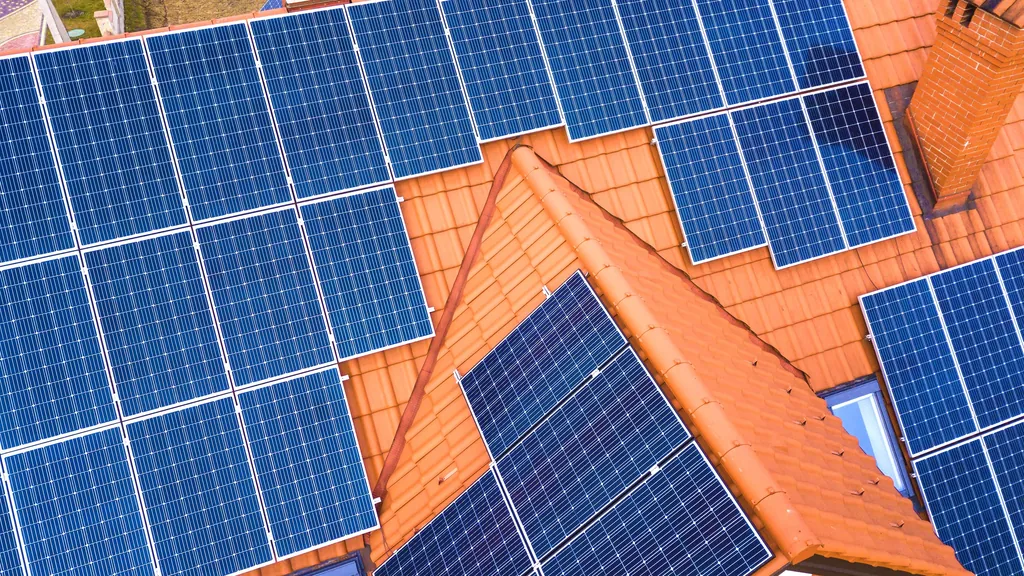
Almost every rooftop module sold today uses monocrystalline silicon. What differs is how the cell is built. For a decade, PERC cells dominated; since around 2023 they have largely been replaced by TOPCon, with heterojunction and back-contact cells as the premium options. For a homeowner, the choice matters less for the headline efficiency than for how a module behaves on hot days, how it looks on the roof, and how long it is guaranteed.
TOPCon: the new standard
Tunnel oxide passivated contact cells add a thin oxide layer and a doped silicon film to the rear of the cell, which reduces losses where the current is collected. Manufacturers could convert existing PERC lines with moderate effort, so TOPCon became the mainstream technology quickly. Residential TOPCon modules typically reach 21.5 to 23 percent efficiency and offer good value per watt.
Heterojunction: strong in the heat
Heterojunction (HJT) cells sandwich crystalline silicon between ultra-thin layers of amorphous silicon. The result is a very low temperature coefficient, often around 0.25 to 0.26 percent loss per degree Celsius, compared with roughly 0.29 to 0.35 percent for most other cells. On a roof in southern Europe, or a flush in-roof system that runs hot, that difference adds up over a summer. HJT modules are usually bifacial and a little more expensive.
Back-contact: all black, no busbars
In back-contact cells, all electrical contacts sit on the rear. The front surface is free of the thin silver lines that cross ordinary cells, which raises efficiency (top residential modules reach 23 to 24 percent) and gives the module a uniform, deep black appearance. For architect-designed homes and visible roofs, this is the panel that disappears best. It also tends to carry the highest price per watt.
Glass-glass or glass-foil
A classic module has glass at the front and a polymer backsheet at the rear. Glass-glass modules use glass on both sides. They are heavier, but more resistant to moisture and micro-cracks, and manufacturers often back them with 30-year product and performance warranties. Many glass-glass modules are bifacial: on a pitched roof the rear side gains little, but on flat roofs with light gravel, on carports and on pergolas the rear can add several percent.
Looks: full black, in-roof and solar tiles
Full-black modules use black backsheets and frames. They look calmer on dark roofs and give up a fraction of a percent of efficiency. In-roof systems replace the roof covering in the module area and sit flush, which looks cleaner and suits new builds, at the cost of slightly higher operating temperatures. Solar roof tiles and coloured modules go further still; they cost considerably more per kilowatt hour and are an architectural choice rather than an economic one.
How to choose
- Limited roof area: choose the highest efficiency you can afford, so each square metre works harder.
- Hot climate or flush mounting: favour a low temperature coefficient, such as heterojunction.
- Visible roof on a design-led house: back-contact or full-black modules, ideally with matched black mounting parts.
- Carport, pergola or flat roof: bifacial glass-glass modules gain from light reflected beneath them.
Whatever you choose, look past the brochure: check the product warranty (12 to 30 years), the performance warranty, the temperature coefficient and the mechanical load rating for snow and wind in your region.
Questions and answers
Which solar panel type is the most efficient?
Back-contact modules currently lead among residential panels at roughly 23 to 24 percent, followed by heterojunction and TOPCon at about 21.5 to 23 percent.
Are bifacial panels worth it on a pitched roof?
Rarely. The rear side receives little light on a pitched roof. Bifacial modules pay off on flat roofs with bright surfaces, carports and pergolas.
Written by the sunaliv editorial team. Figures are typical ranges for Central Europe unless stated otherwise and reflect the state of knowledge in October 2026. Spotted an error? Write to info@nextao.de and we will correct it openly.