Building-integrated photovoltaics: when the facade becomes the power plant
Solar glass can replace cladding, balustrades and canopies. The kilowatt hours cost more, but the facade was going to cost money anyway.
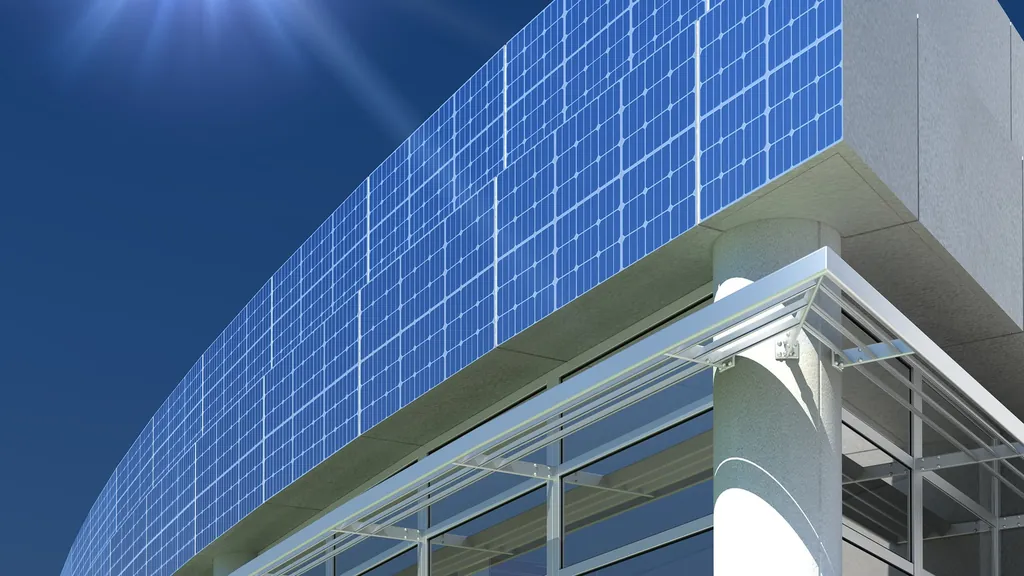
Building-integrated photovoltaics (BIPV) are solar modules that do the work of a building element: roof covering, facade cladding, a glass balustrade, a canopy or a skylight. Instead of adding a power plant to a finished building, the building envelope itself produces electricity. That makes BIPV more expensive per kilowatt peak than rooftop panels on rails, but the comparison is misleading: the alternative is not nothing, but natural stone, glass or metal cladding that also costs money and produces nothing.
What a facade produces
A vertical surface receives less sunlight over the year than a tilted roof. In Central Europe, a south-facing facade typically yields roughly 60 to 75 percent of an optimally tilted roof; east and west facades less. The distribution is different though: vertical modules catch the low winter sun well, stay free of snow and produce relatively more in the months when electricity is most valuable to a heat pump. For tall buildings with a small roof, the facade is often simply where the area is.
Forms of integration
- Rainscreen facades: solar glass panels mounted on a ventilated substructure in place of cladding. The air gap keeps the modules cooler.
- Glass facades and curtain walls: modules with spaced cells or thin film let light through and shade at the same time.
- Balustrades and canopies: safety glass with laminated cells for balconies, terraces and entrances.
- In-roof and solar roof tiles: the roof covering itself generates power.
Colour and appearance
Modules no longer have to be blue or black. Coloured glass, printed patterns and special interlayers produce terracotta, sand, grey, green or even white surfaces. Colour comes at a cost in output: subtle tints lose a few percent, strongly coloured or near-white modules considerably more. Architects often combine active and identical-looking inactive panels where shading or geometry makes generation pointless, so the facade stays uniform.
Approvals and planning
As part of the building envelope, BIPV must meet building regulations for glass, fire safety and structural loads, which can require specific product approvals, especially for overhead glazing. Bring the facade engineer, the electrical planner and the module supplier together early: cable routes, inverter locations and maintenance access are far easier to plan than to retrofit.
When BIPV makes sense
BIPV is most convincing when a high-quality facade is planned anyway, when roof area is limited, or when the architecture calls for a seamless surface. For a family home with a large, well oriented roof, conventional modules still deliver more kilowatt hours per euro. For a design-led building, BIPV turns a cost line into an asset that pays something back every day.
Questions and answers
How much electricity does a solar facade produce?
In Central Europe, a south-facing solar facade typically yields roughly 60 to 75 percent of an optimally tilted roof of the same size, with a larger share in winter.
Is building-integrated photovoltaics more expensive?
Per kilowatt peak, yes. But BIPV replaces cladding, glass or roofing that would cost money anyway, so the real extra cost is often smaller than it looks.
Written by the sunaliv editorial team. Figures are typical ranges for Central Europe unless stated otherwise and reflect the state of knowledge in October 2026. Spotted an error? Write to info@nextao.de and we will correct it openly.